Somatic Exercises for Panic Attacks: How to Calm Your Body When Anxiety Takes Over
If you’ve ever experienced a panic attack, you know just how uncomfortable they can be. The racing heart, shortness of breath, and feeling of being out of control are often overwhelming. Many who struggle with panic attacks struggle to find effective methods for working with them.
Somatic exercises are body-based techniques that aim to help regulate the nervous system. Research has found somatic exercises to be effective in reducing anxiety in many individuals, especially those with PTSD. These are practices you can do regularly to help regulate yourself, or use in the moment you feel panic arising.
For more somatic exercises, check out my post Somatic Exercises for Sleep: Calming the Body to Quiet the Mind.
What Are Somatic Exercises?
Somatic exercises rest on the principle that the mind and body are intimately connected. The nervous system plays a crucial role in how we think and feel in the body, and somatic exercises help regulate the nervous system.
The goal of somatic practices isn’t to necessarily fully relax. Instead, it’s to regulate the nervous system and find some awareness. These exercises offer different ways to tell your nervous system that you are safe. I’ll cover various techniques, but many are rooted in the body, as this helps the thoughts slow down during a panic attack.
How Somatic Exercises Can Help During a Panic Attack
Whether you’re having a moment of anxiety, a silent panic attack, or falling into full-on panic, somatic exercises can help. To understand how somatic exercises help during a panic attack, we first need to understand the fight-or-flight response in the mind and body.
The Fight-or-Flight Response
When the nervous system senses danger, the amgydala fires a signal to the hypothalamus. This activates the sympathetic nervous system and your adrenal glands release adrenaline (epinephrine) and cortisol (the “stress hormone”). This causes a spike in heart rate, quicker breathing, tense muscles, sweating, and a decrease in sensitivity to pain.
Although we still often refer to this at the fight-or-flight response, there’s actually a third survival option in freezing. This is where we get locked up and unable to make a decision. This system evolved over millenia to help humans deal with real physical threats, but the system fires today in relation to many types of stress and anxiety.
Somatic Practices and Regulation
At the core of somatic exercises is grounding into the present moment. With an increased awareness of physical sensations, we move out of the thinking mind and into the body. This can help release tension and deactivate the sympathetic nervous system. Instead, we active the parasympathetic nervous system, which tells our minds and bodies that we are safe.
Often, experiences of panic and anxiety carry with them a significant mental component. When we turn toward the body, we ground ourselves back into the here and now. As the body and nervous system calm, so do the thoughts.
Somatic Exercises for Panic Attacks
There are many different somatic exercises out there than can be useful for those experiencing panic attacks. You can use these practices when you feel panic arising. However, I also recommend making these practices a regular part of your day. With continual grounding, the nervous system will not get quite as activated in moments of stress.
5-4-3-2-1
This practice is one of the most foundational somatic exercises. It’s a great somatic exercise for anxiety as well as panic attacks, and you can do it absolutely anywhere. You can do it out loud, or silently in your head. Remember to move as slowly as possible. Here’s how it’s done:
Begin by naming 5 things you can see right now
Name 4 things you can touch or feel
Name 3 things you can hear
Name 2 things you can smell
Name 1 thing you can taste
You can move through the practice one time, or go through it several times if you wish. This is a powerful practice in re-arriving to the present moment.
Walking Meditation
Walking meditation is a fantastic somatic exercise. It combines meditation with movement, two powerful ways to settle the nervous system. For those struggling with anxiety or panic, walking offers a more approachable way to meditate and begin to detach from negative thoughts.
Begin by finding space to walk back and forth. I recommend somewhere between 15 feet and 30 feet. If you can, make it a place free from others so you can fully be present.
Begin walking along your path very slowly. Feel the feeling of your feet lifting up off the ground and coming into contact with each step. There’s nothing to do but tune into the body here.
When you reach the end of your walking path, mindfully turn around. As you walk back, you might open the awareness a bit to include the movement in the legs as well.
Below is a guided walking meditation for beginners from Matthew Sockolov. It offers some instructions that you can use to build your own walking meditation practice.
Temperature Grounding
Temperature grounding is a practical way to tune into a different experience other than the anxiety and panic. As we turn away from the feeling of panic, we stop feeding it. With temperature grounding we immerse ourselves in a different physical experience.
Find something that is cool or cold. Hold it in your hands, put it on your skin, and pay attention to the sensation.
Splash some cool water on the face. Feel how it feels when the water touches your face.
If you can, take a cool (not cold) shower. This can help reset the nervous system with many things including panic, anxiety, anger, and more.
Self-Holding
One of the simplest and most foundational exercises in somatic experiencing, self-holding is the act of hugging oneself. Much like a hug from another person, self-holding can help us feel safe and held. This activates the parasympathetic nervous system and creates regulation in the body.
You can do this seated, standing, or lying down. Begin by simply wrapping your arms around yourself in a hug.
Apply gentle pressure. Don’t squeeze too tightly, but squeeze enough that you can really feel it.
Recognize the feelings of being held and support. You might play with the pressure applied to see how the feeling changes.
Gentle Shaking
Gentle shaking comes from the work of Peter Levine, who observed animals “shaking it off” after a traumatic experience. We use this at home with our kids, and it works wonderfully. The idea here is we allow the energy to move through our nervous system and release it rather than let it build up into trauma or panic.
You can try this exercise by itself, or combine it with the self-holding exercise above.
Begin by shaking your hands gently, letting the energy out.
Continue on to the arms, legs, and whole body.
Remember to keep the movements and shaking gentle. Shaking too hard will actually activate the sympathetic nervous system.
Heart Breathing
This is a form of meditation, and one that Dr. Kristen Neff advocates for passionately. Touch activates the care system and can help us feel safe. Furthermore, touch in this way releases oxytocin.
Place one hand on the chest and one on the belly.
Breathe slowly and smoothly.
Focus on the movement beneath your hands. Feel the chest and belly rise and fall with each inhale and exhale.
Progressive Muscle Relaxation
A progressive muscle relaxation is a form of body scan meditation that we can use to intentionally invite in calm to the body. We move through the body bit by bit, tensing and releasing tension in the muscle groups. You can do this in any position, but many people find it most useful while lying down.
Begin by bringing your attention to your feet. Feel your soles, arches, and toes. Just for a moment, gently tense the muscles in your feet and relax. Feel the relaxation with the release.
Move up to your ankles and calves. Again tense the muscles slightly and release.
Continue to move up through the body like this until you reach the top of your head.
Grounding Through the Feet
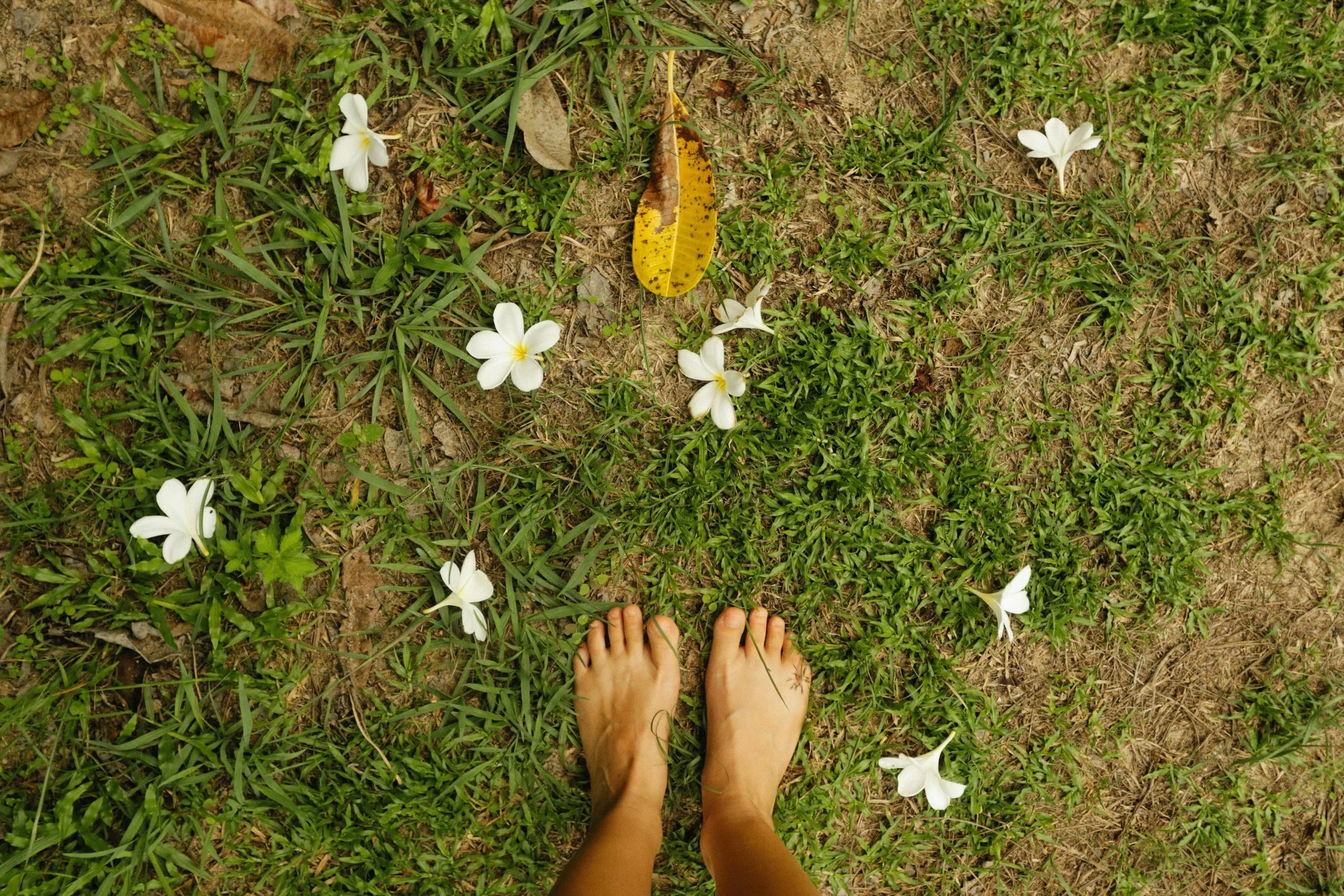
I like this somatic exercise for panic attacks because it is very simple and we can do it inconspicuously anywhere. This practice works because it brings us into the body, into what is generally a neutral or even pleasant sensation. It offers support and connection as we feel our weight on the ground.
This practice is best done standing, but you can also try it seated. Put your feet flat on the floor beneath you.
Feel the contact of your feet with the ground. Recognize the contact, feel the pressure, and rest your awareness here.
Tune into any sensations of support, groundedness, and connection. You might try taking a few deep or mindful breaths here as well.
Finding Additional Support
Remember that you do not have to go through this alone. There are people out there to support you with panic attacks. You can reach out to me here for a free consultation. I also recommend you connect with friends, family, or trusted loved ones. Talking about the experience with others can help you process, feel supported, and find new coping mechanisms.
